Mixed-Metal Jewelry Collections: A Production Checklist for Brands
A Practical Guide for Jewelry Brands
Mixed metal jewelry manufacturing starts with a clear material brief. A gold-and-silver look may use separate metal components, different gold alloys, or selective plating over one base material. Each route needs its own decisions about assembly, finishing, sampling, and care.
For a brand developing a collection, the useful question is simple: how will the approved appearance become a repeatable product? Use this checklist before requesting samples or confirming a production order.
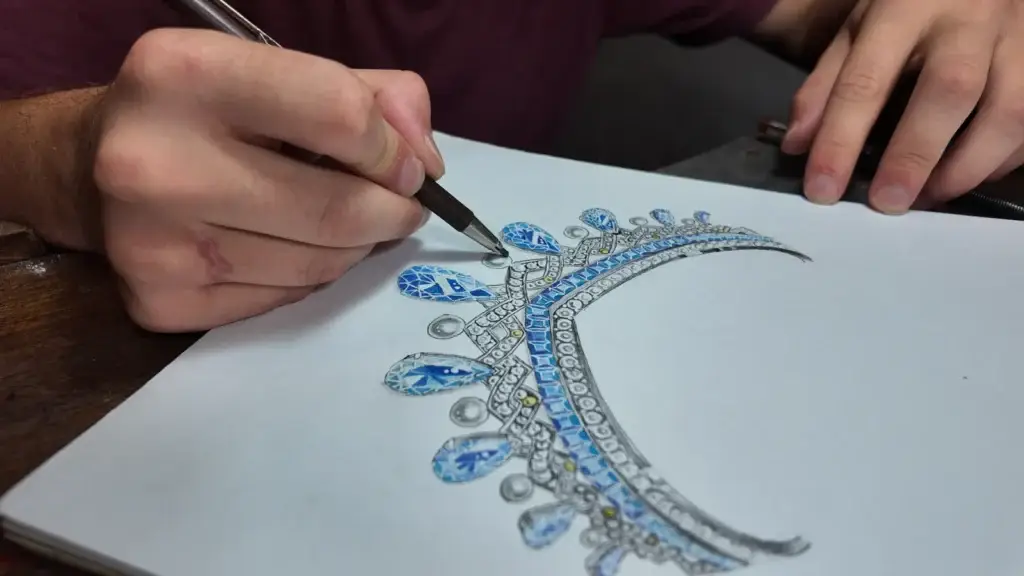
A hand-drawn jewelry concept records the intended form and decorative details.
01 · Design brief
Define the construction
Start by describing how the colors are created. Cartier’s Trinity rings, for example, use interlinked bands of white, yellow, and rose gold. These are different gold alloys assembled into one design.
A two-tone appearance can also come from a surface treatment. Rio Grande’s plating guide identifies two-tone designs as one use of electroplating. Ask your supplier to describe the proposed construction in writing. A reference image alone cannot specify what sits beneath each color.
02 · MATERIAL MAP
Map every material and finish
Mark each component on a drawing, including clasps, posts, connecting rings, and areas normally hidden during wear. Give every part a material and finish description.
Base metal or alloy, with fineness where relevant
Plated areas and the intended coating specification
Polished, brushed, textured, or other surface finish
Position of each color boundary
Keep material and color in separate fields. “Gold color” leaves important questions open. If a component changes during development, update the drawing and material list together so the sample and quotation still describe the same product.
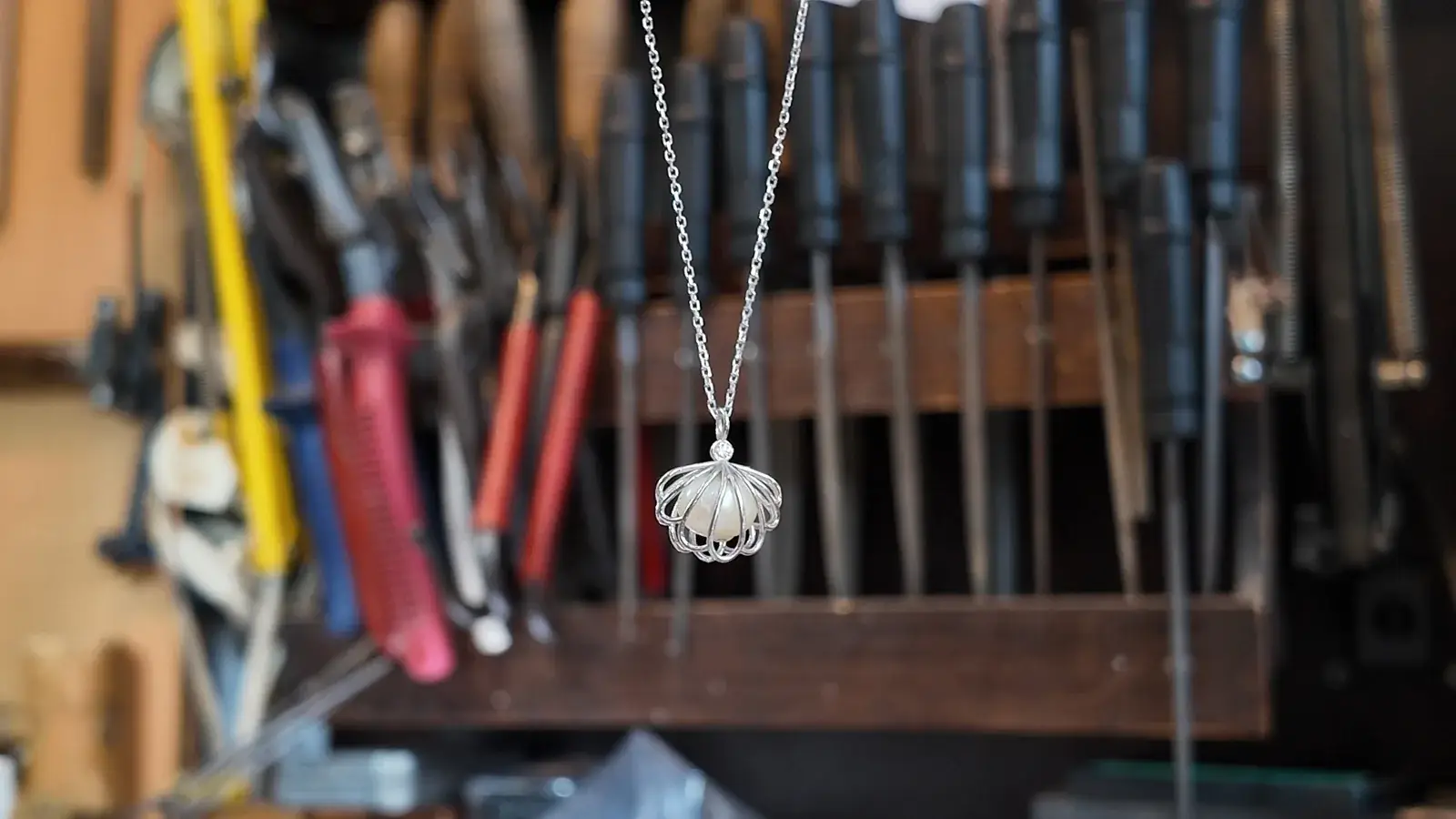
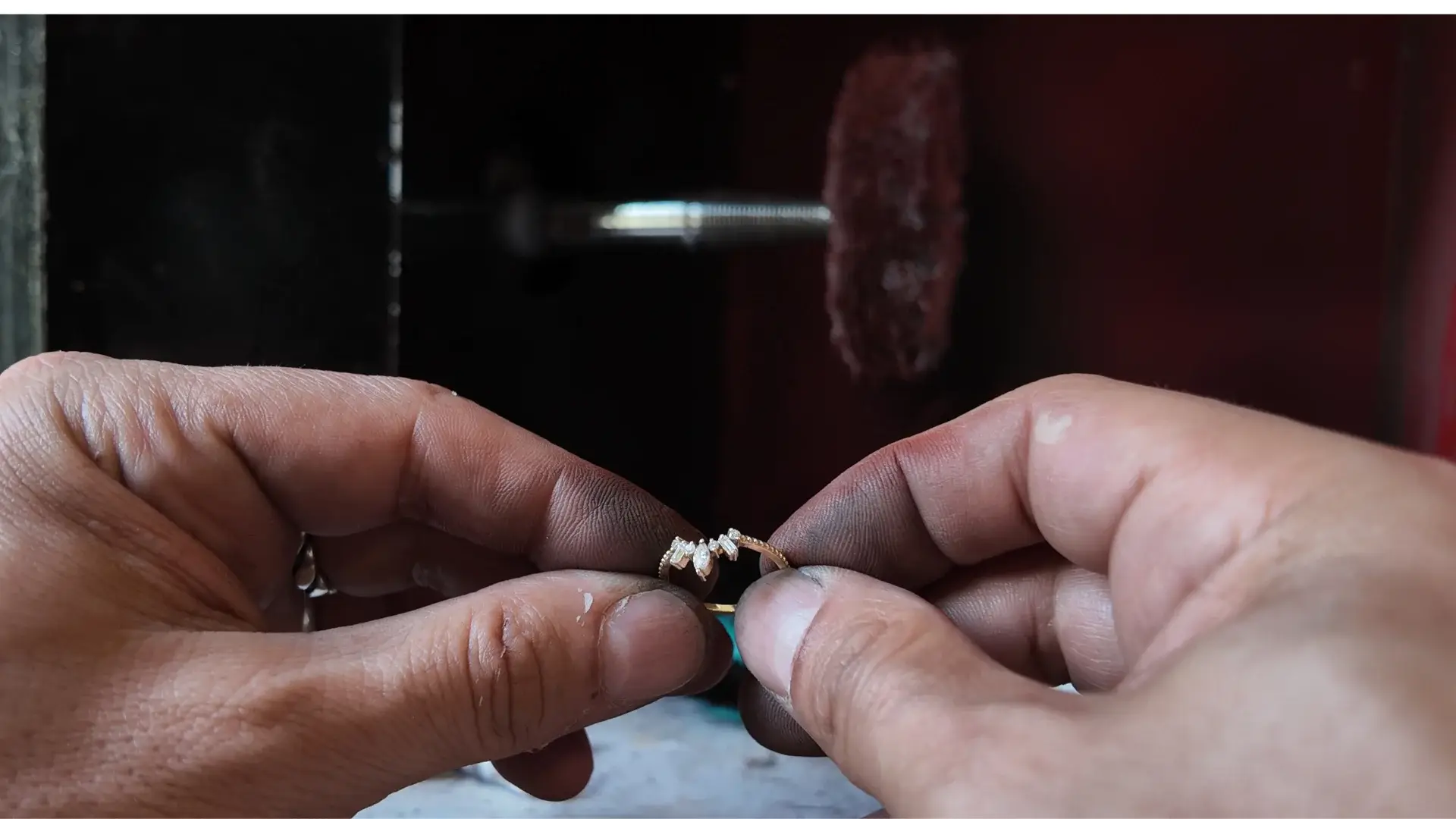
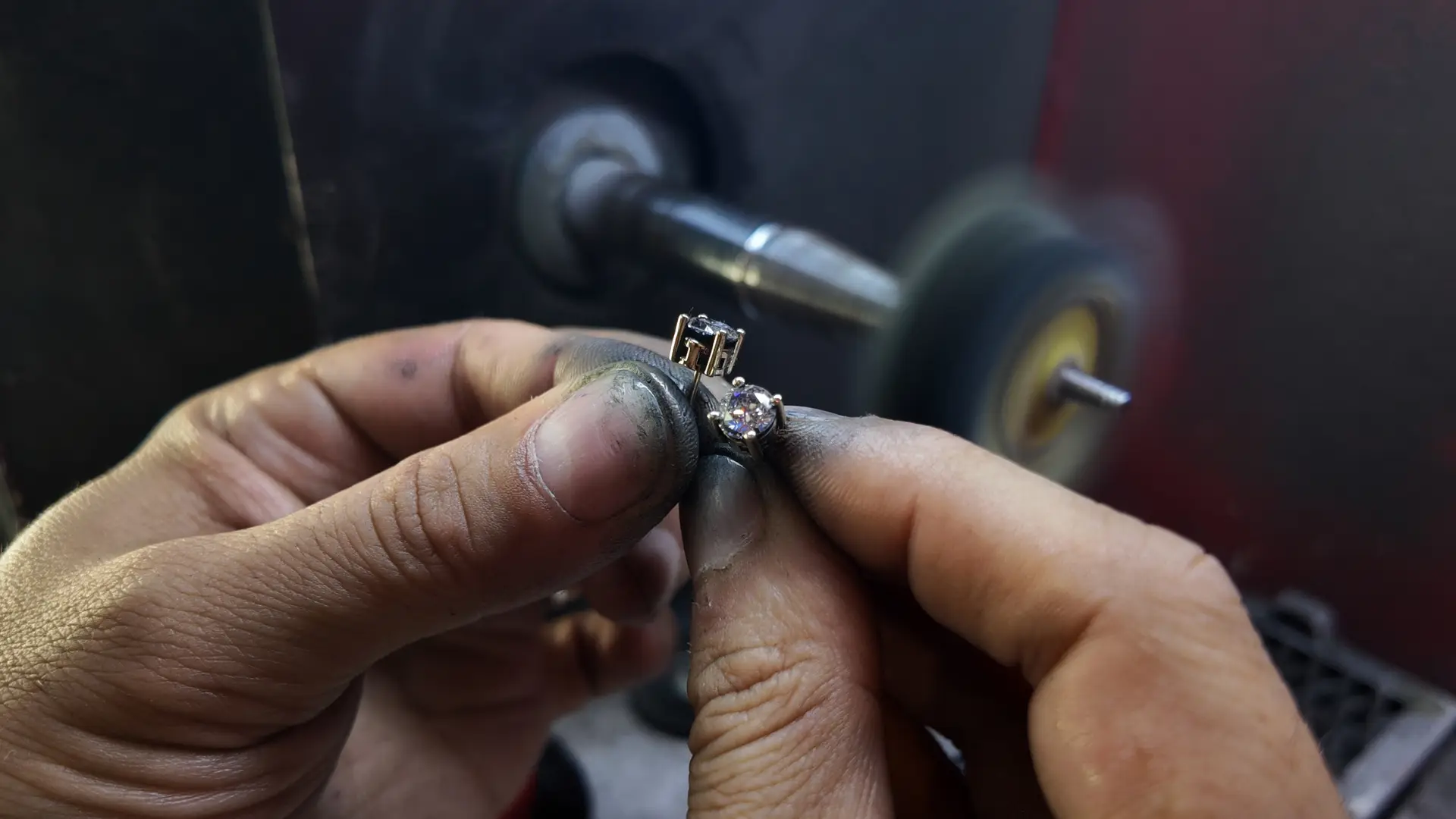
Jewelry pieces photographed together at the bench for a close view of their appearance.
03 · COLOR REFERENCES
Approve physical color references
Choose a physical reference for each color and texture. Review the finishes side by side on the intended product shape, especially where bright and matte areas meet. Use photographs to record the decision, alongside the approved physical sample.
Finisher Tanury’s manufacturer intake asks separately about base metal, desired finish, pre-finishing, coating thickness, and a color standard or sample. This is a useful model for a brand’s finishing brief.
Agree how later samples will be compared with the reference, including the viewing conditions and who approves differences.
04 · PRODUCTION SEQUENCE
Review the production sequence
Ask the manufacturer to explain when components will be joined, polished, plated, and assembled. Identify surfaces that may become difficult to reach after assembly. Discuss how neighboring colors will be separated during finishing.
The Heimerle + Meule electroplating guide describes selective plating and masking. It also explains that consistent processing conditions matter for repeatable plated color.
Have the supplier select the process for your materials and design. Keep any proposed process change connected to a new sample review.
05 · Sample approval
Check the finished sample
Review a sample made with the intended materials and finishes. Check the complete piece as well as close-up details.
Do colors and textures match the approved references?
Are transitions clean, including inside curves and recesses?
Are joins and contact surfaces finished as agreed?
Do moving parts work without unwanted contact or visible finish damage?
Record issues with marked photographs and clear locations. Agree any additional wear or coating tests with the supplier before approval. Visual inspection alone does not establish long-term performance.
06 · Production
Record production approval
Keep the approved sample, dated specification, material map, finish references, and revision number together. Confirm which sample represents the production target and how deviations will be handled.
Agree who keeps the reference sample and how it is labeled and protected. A later reorder should point to the same approved version.
Also agree care wording, replacement-part matching, and any refinishing expectations. These details should reflect the actual construction. Recheck them if the alloy, coating, or assembly route changes.
The takeaway
Build the brief before the batch
A clear mixed-metal brief connects the intended look to specific materials, finishes, and sample checks. To prepare the next step, review Bamina’s jewelry sampling service and bring your material map, color references, and open production questions to the discussion.