Lightweight Gold Jewelry: What Brands Should Test Before Production
A Practical Guide for Jewelry Brands
Lightweight gold jewelry design starts with a clear question: where can you reduce metal without compromising the way a piece works?
In its July 2026 outlook, the World Gold Council noted that high gold prices were encouraging fewer or lighter purchases. For brands, the response should be thoughtful design, supported by physical samples.
Use these six checks to connect your weight target with construction, comfort, and production approval.
A CAD model helps the team review form, stone placement, and construction before sampling.
01 · Design brief
Start with the wear brief
A daily ring and an occasional pendant face different demands. Start with the intended wear, then give the workshop a practical brief.
Form: dimensions, ring size or chain length, and stone details
Weight: target range for the metal and the complete piece
Use: expected wear, comfort, and movement
Ask for a CAD estimate in the chosen alloy. Then confirm it on the finished sample. Stones and findings add weight, while setting and polishing can change the result.
If the target requires very thin construction, reconsider the scale or silhouette before approving it.
02 · Construction
Protect the structure
Review shanks, shoulders, bails, hinges, joins, and stone seats before removing material. These areas connect parts or receive repeated contact.
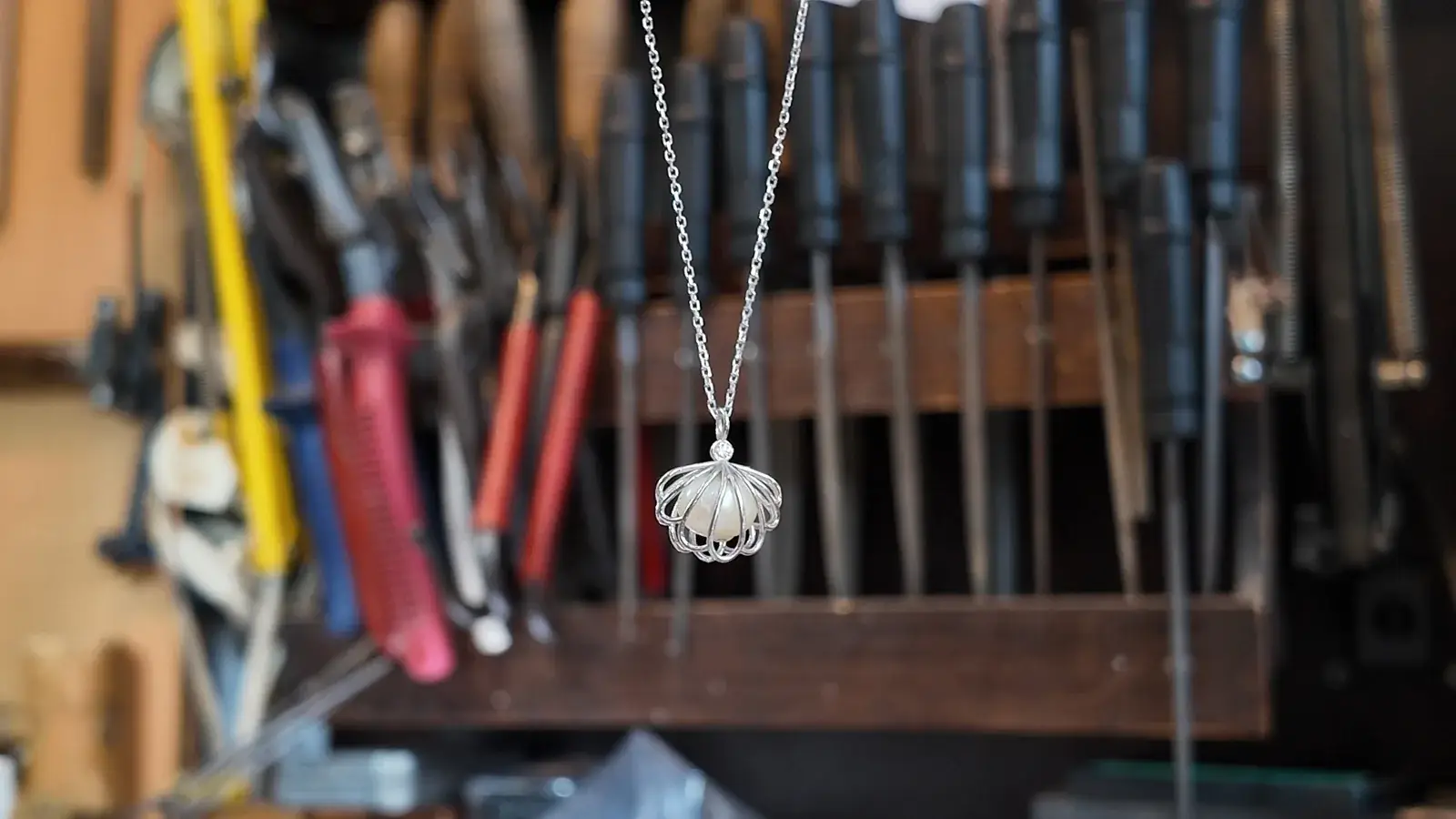
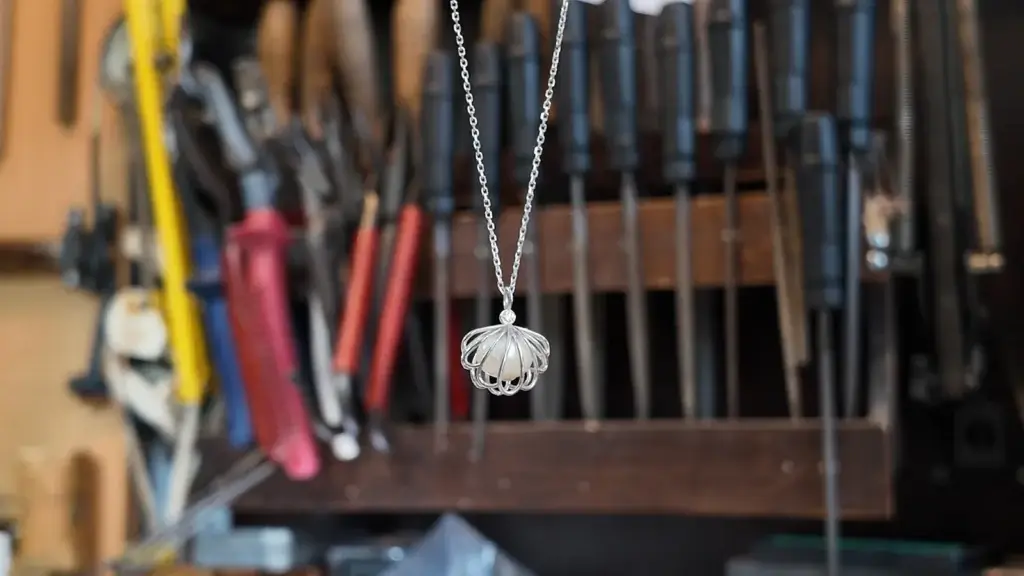
Openwork and hollow forms can reduce metal while preserving visual volume. However, thin shells may dent, narrow links may distort, and enclosed surfaces can complicate repair.
Design checkpoint: compare cross-sections and transitions individually. Avoid reducing every surface by the same percentage, and leave enough material for setting and finishing.
Material choice and the production process should be considered together.
03 · Material choice
Match alloy and process
Karat is only part of the decision. GIA explains that alloying gold adds strength and durability. Composition and processing also matter.
Discuss how the piece will be cast or formed, joined, finished, and repaired before fixing its geometry.
Formlabs’ casting guidance highlights process-aware feature design and smooth transitions. Its printed-pattern dimensions are not universal minimums for finished gold jewelry. Agree the dimensions with your workshop and verify the physical sample.
04 · Settings & findings
Check every connection
A lighter body still needs dependable connections. Check the complete assembly, not only its most visible surface.
Rings: prong support, bezel walls, and stone security
Necklaces: bail clearance, jump rings, chain, and clasp
Earrings: posts, backings, balance, and comfort
Review how these parts work together. A secure setting or smooth clasp cannot be judged from appearance alone. Keep the selected stones and findings in the sample brief so the workshop tests the intended combination.
05 · Sample approval
Test the finished sample
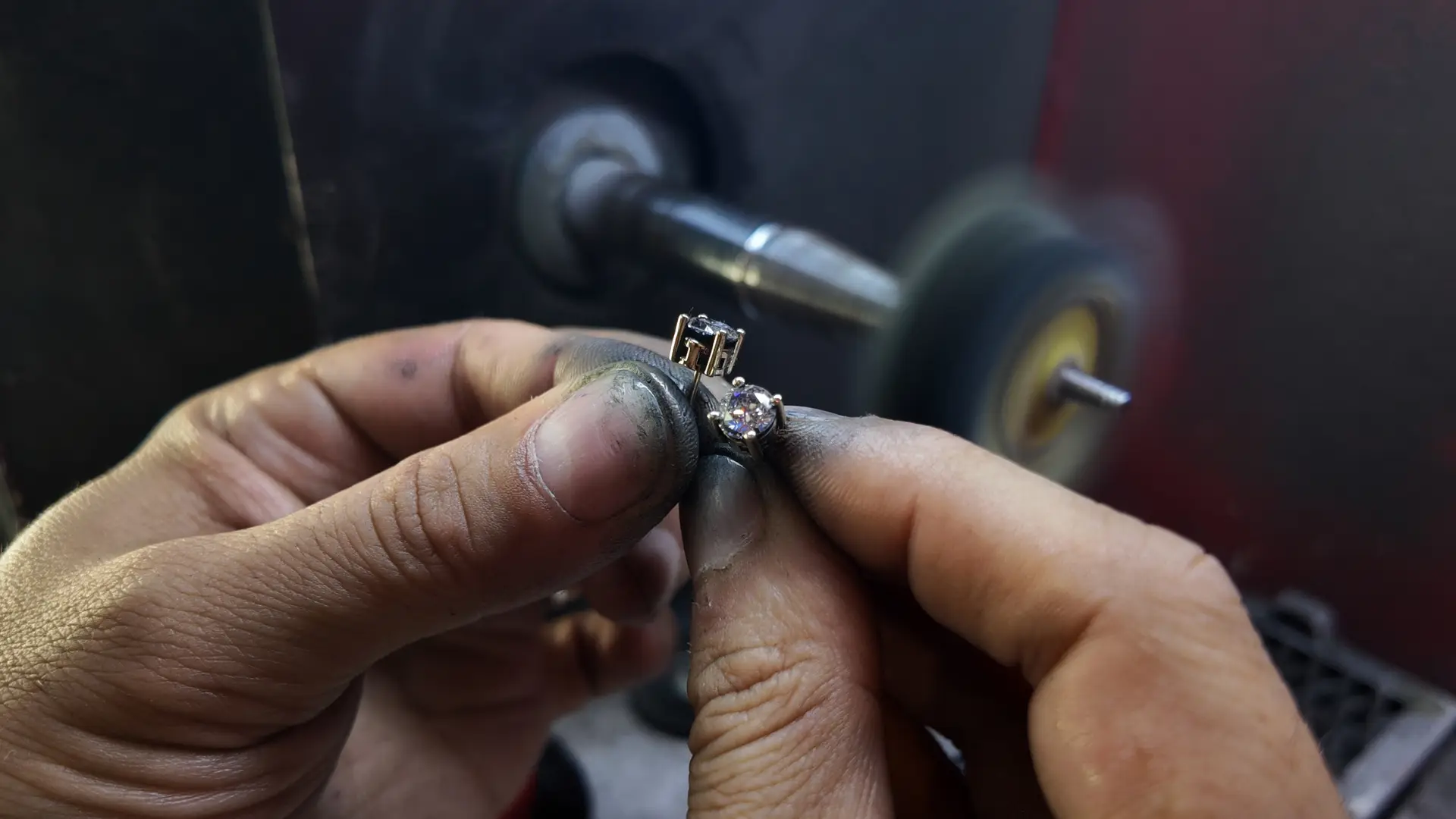
Measure the sample after setting and polishing. Record its actual weight and dimensions, then inspect the joins, surfaces, fit, and moving parts.
Agree product-specific test methods and acceptance criteria
Check clasp operation, hinge movement, deformation, or balance where relevant
Revise and retest any detail that fails an agreed check
A visual inspection alone cannot prove long-term durability. Bamina’s sampling process lets brands review a physical piece before the main production run. Keep the approved sample as the reference.
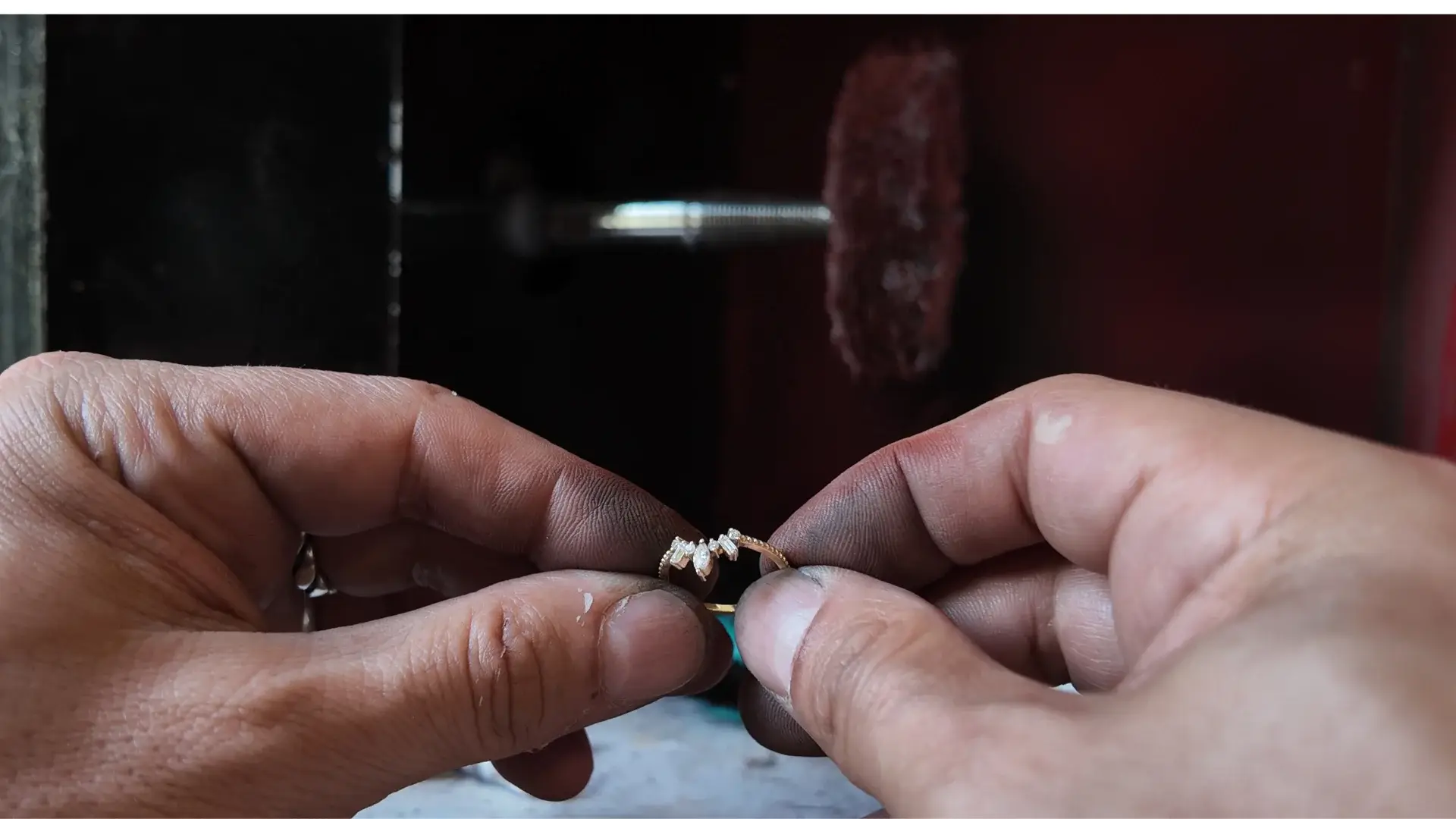
The workshop video above shows a 14K gold ring moving through production. Use it as a process example, not as a durability test or evidence of measured weight reduction.
06 · Production
Lock the production brief
Turn the approved sample into a version-controlled production brief. Record the alloy, finish, dimensions, size range, target weight and tolerance, stones, findings, and quality checks.
Add reference photographs. Confirm that the workshop and your team are using the same version before production begins.
Compare the complete quotation, including development, labor, setting, finishing, and inspection. Less metal can reduce one cost while complex construction raises another. Describe hollow construction where applicable and provide appropriate care guidance.
The takeaway
Less weight. A considered design.
Good lightweight gold jewelry design balances comfort, material use, and construction. Protect high-stress areas, choose the alloy with the process, and approve a finished sample.
The final decision: weight reduction is a target. Durability needs evidence from the actual piece and the agreed checks.
Share your concept, preferred alloy, dimensions, and target weight with Bamina to plan the next sample.