
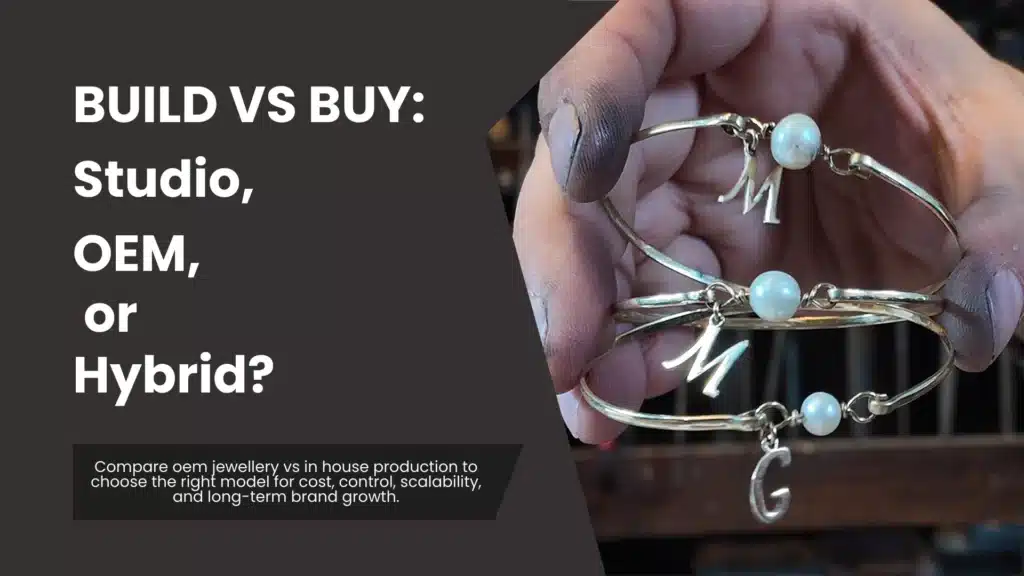
Every growing jewelry brand eventually faces a major decision: should you build everything in-house, outsource to an OEM partner, or combine both models? This question goes far beyond cost. It affects quality, speed, flexibility, and brand control. Understanding oem jewellery vs in house helps brands choose a structure that supports long-term growth, not just short-term production.

In-house production gives brands complete control over design, craftsmanship, and workflow. When discussing oem jewellery vs in house, the in-house model stands out for creative ownership. Designers work closely with artisans, adjust details quickly, and oversee every stage of production. This setup supports experimentation, rapid prototyping, and strong brand identity.
However, in-house production requires high investment. Equipment, skilled labor, compliance, and capacity planning all demand time and capital. For small teams, scaling can become challenging during peak seasons.
OEM partners specialize in producing jewelry at scale. They bring established systems, trained teams, and optimized workflows. In the oem jewellery vs in house comparison, OEM manufacturing offers clear advantages in cost efficiency and volume handling. Brands can launch collections faster, meet large orders, and access advanced production techniques without building everything internally.
That said, outsourcing requires trust and strong communication. Brands must share clear specifications, quality standards, and timelines. Without alignment, the final result may drift from the original vision.
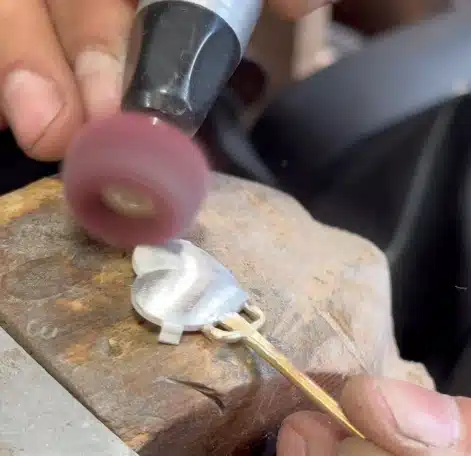
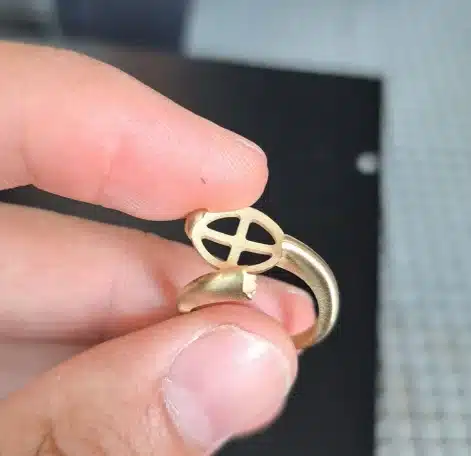
Cost structure plays a major role in the oem jewellery vs in house decision. In-house production carries fixed costs—rent, machinery, salaries—regardless of order volume. OEM production shifts many of these costs into variable pricing per piece. This reduces risk during uncertain demand periods.
On the other hand, in-house teams gain long-term value by developing internal expertise. Brands must weigh short-term savings against long-term capability building.
Many modern brands choose a hybrid approach. They keep design, prototyping, and signature pieces in-house while outsourcing bulk production to OEM partners. In the oem jewellery vs in house discussion, the hybrid model offers balance. Brands maintain creative control and brand DNA while benefiting from OEM efficiency and scale.
This approach works well for collections that mix core products with seasonal or high-volume items. It also allows brands to scale up or down without major operational stress.


The right model depends on where the brand stands today—and where it wants to go. Early-stage brands often start with OEM partners to reduce risk. As the brand grows, it may invest in in-house capabilities. In evaluating oem jewellery vs in house, leadership must consider brand positioning, target market, cash flow, and growth plans.
Luxury brands may prioritize in-house craftsmanship for storytelling, while commercial brands may rely more on OEM speed and pricing. There is no single correct answer—only strategic alignment.