Metal selection defines how jewelry looks, feels, and performs. It affects durability, price, comfort, and brand perception. For designers and brands, knowing how to choose jewelry metal is a strategic decision, not just an aesthetic one. Each metal brings different strengths and limits. When you choose wisely, designs last longer and customers stay satisfied.
Before selecting a metal, define how the jewelry will be worn. Daily wear demands strength and resistance, while occasional pieces allow more flexibility. Understanding how to choose jewelry metal begins with use case. Rings and bracelets face constant contact, so they need stronger metals. Earrings and pendants allow lighter options. Purpose guides every technical choice that follows.
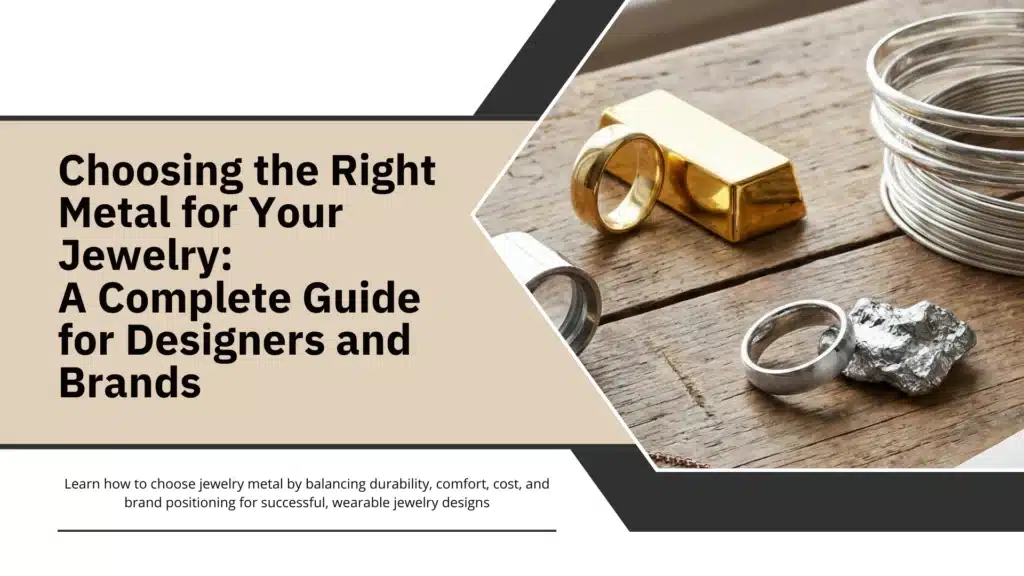
Designers often work with silver, gold, gold vermeil, and stainless steel. Sterling silver offers beauty and accessibility but needs proper thickness for strength. Gold provides durability and long-term value. Gold vermeil balances luxury look with lower cost. Stainless steel offers high strength and affordability. Learning how to choose jewelry metal means matching these properties to design goals and customer expectations.
Metal weight affects comfort as much as cost. Heavy pieces feel premium but may reduce wearability. Lightweight designs feel easy but require careful structure. When deciding how to choose jewelry metal, designers must balance visual impact with comfort. Wall thickness, hollow structures, and finishing techniques all influence how a piece feels on the body.
Metal choice directly shapes pricing strategy. Gold prices fluctuate, while silver offers more stability. Gold vermeil provides visual appeal with controlled costs. Understanding how to choose jewelry metal helps brands protect margins while staying aligned with their market. Luxury brands often favor solid gold, while emerging brands may start with silver or vermeil to reach wider audiences.
Jewelry touches the skin, so safety matters. Some metals trigger reactions if not properly tested. Designers must consider regulations and allergies when learning how to choose jewelry metal. Sterling silver and gold usually suit sensitive skin, while plating quality matters for vermeil. Compliance builds trust and prevents long-term issues for brands selling internationally.