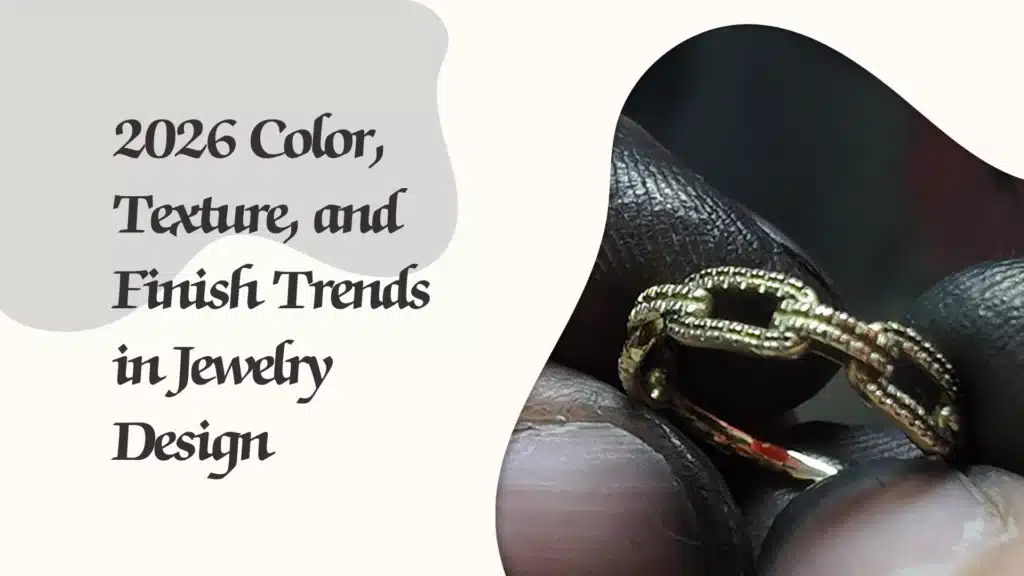
Jewelry design evolves with culture, emotion, and lifestyle. In 2026, designers move toward balance, depth, and tactile expression. 2026 Jewelry Trends show a clear shift away from sharp contrasts and heavy decoration toward refined color, thoughtful texture, and intentional finishes. These elements work together to create jewelry that feels calm, modern, and wearable.
Color plays a leading role in 2026 Jewelry Trends. Designers favor tones that feel grounded yet expressive. Muted blues, warm neutrals, gentle greens, and softened purples dominate collections. These colors offer emotion without excess. Instead of loud statements, designers use color to create mood and connection. Subtle gemstone hues and enamel accents replace high-contrast palettes, making jewelry easier to wear every day.
Texture adds depth and character. In 2026 Jewelry Trends, smooth perfection gives way to tactile surfaces. Hammered finishes, brushed metals, soft matte textures, and organic patterns gain popularity. These textures invite touch and create visual interest without relying on shine. Designers use texture to tell a story, often inspired by nature, architecture, or handcraft traditions.
High-polish surfaces no longer dominate alone. 2026 Jewelry Trends highlight a broader finish palette. Satin, matte, sandblasted, and soft-brushed finishes appear more frequently. These finishes reduce glare and emphasize form. Designers also mix finishes within one piece, pairing matte surfaces with subtle polished edges to create contrast without harshness.
Color, texture, and finish must work together. In 2026 Jewelry Trends, designers focus on harmony rather than complexity. Warm gold tones pair with brushed finishes. Silver often appears with matte or lightly textured surfaces. Gemstones complement metal rather than overpower it. This balance creates jewelry that feels intentional and cohesive.
Modern consumers value comfort and longevity. 2026 Jewelry Trends reflect this shift. Designers prioritize smooth edges, balanced weight, and durable finishes. Textured and matte surfaces also hide wear better over time. By focusing on practical beauty, designers create pieces that age gracefully rather than show damage quickly.