
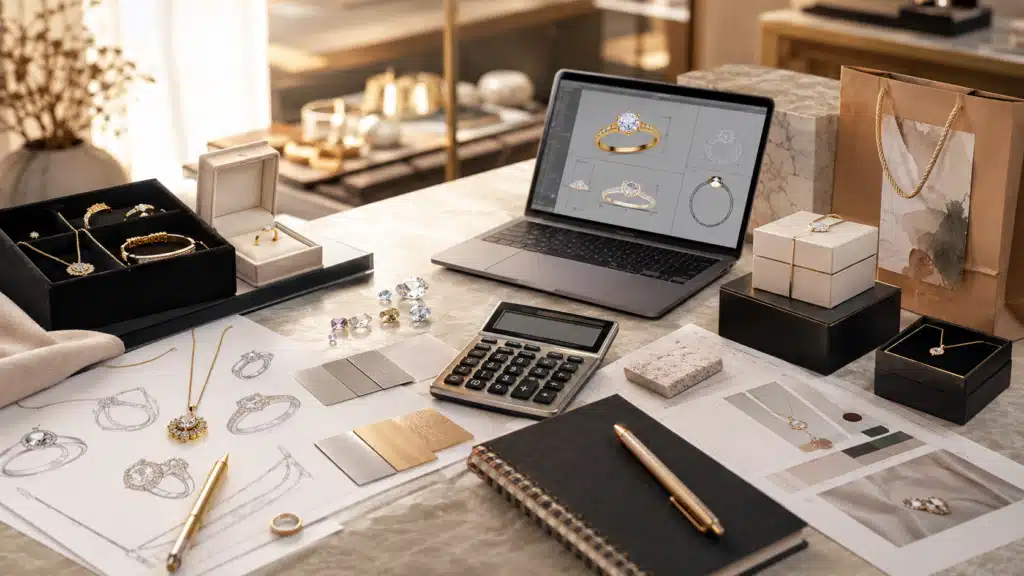
Many founders ask the same question before launching: what is the real cost to start a jewelry line? The answer depends on your designs, materials, order quantity, branding, and sales plan. Because each brand has different goals, there is no single fixed number.
However, a clear budget creates a chain of smart decisions. This chain connects your concept, CAD work, samples, materials, packaging, and marketing. When you understand each cost area, you can plan with more confidence and avoid surprises.
Therefore, the cost to start a jewelry line should not be seen as one large expense. Instead, it should be divided into clear stages. This approach helps new brands spend wisely and grow step by step.

The first cost usually comes from design development. Before production begins, your brand needs a clear concept, style direction, and product plan. This stage may include sketches, mood boards, reference images, or design consulting.
The design stage starts the cost chain because every later decision depends on the first idea. A simple charm may cost less to develop than a detailed stone-set ring. Even a small chain pendant needs clear proportions before production can begin. One chain necklace may look simple, but its length, clasp, and pendant balance still affect cost.
As a result, brands should not rush this stage. Clear planning reduces revisions, saves time, and gives the manufacturer better instructions.
After the concept is ready, many custom pieces move into CAD design. CAD turns your idea into a precise 3D model. This file shows thickness, size, stone placement, surface details, and structure.
CAD also protects the chain of production because the team can check technical details before sampling. For example, a pendant may need stronger walls, a ring may need better comfort, or a chain thickness may need adjustment. If a necklace design includes a pendant, chain length must also match the final style.
This stage adds to the cost to start a jewelry line, but it often saves money later. When the CAD file is correct, brands avoid many production mistakes. Therefore, technical design should be treated as an investment, not just an extra fee.


Sampling is one of the most important costs for a new jewelry brand. A sample allows you to see the real product before placing a larger order. You can check size, comfort, weight, polish, stone setting, and overall quality.
Sampling tests the full chain from digital design to real jewelry. If the piece includes a necklace, the chain clasp should feel secure. The chain feels should match the pendant’s weight and style. If something looks wrong, you can correct it before bulk production.
The cost to start a jewelry line often becomes safer when brands invest in sampling. Although samples require money upfront, they help prevent larger mistakes later. They also give you real products for photography, marketing, and customer testing.
Material choice has a major impact on your budget. Sterling silver, gold vermeil, and solid gold all sit at different price levels. Stone choice also matters. Cubic zirconia, lab-grown stones, natural stones, and diamonds can change the final price quickly.
Material costs sit in the middle of the chain because they affect both production and retail price. A heavy chain design needs more metal than a thin charm. A gold chain finish may require extra plating work. Each chain component, including clasps and jump rings, should match the same quality level.
Production quantity also affects the cost to start a jewelry line. Small runs cost more per piece, while larger orders can reduce unit costs. However, startups should avoid producing too much too soon. A focused first collection often works better than a large launch with weak planning.
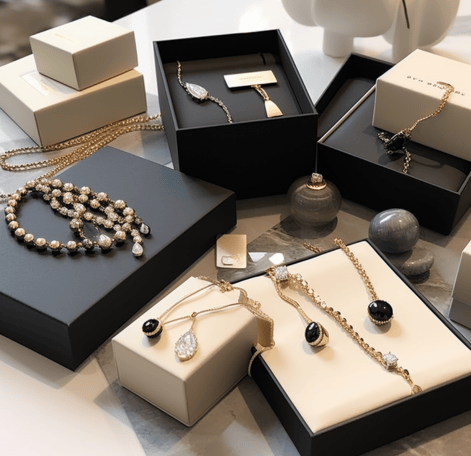
Production is only part of the budget. Your brand also needs a logo, packaging, product photography, website content, and marketing. These elements shape how customers see your jewelry.
Packaging, photos, website, and marketing add another chain of costs. A chain box or pouch can make a necklace feel more premium. Your marketing chain should also include social media content, email campaigns, and product descriptions. Good visuals help customers understand shine, scale, and detail.
The cost to start a jewelry line becomes more realistic when you include these expenses early. A beautiful product can still struggle if the presentation feels weak. Therefore, branding and marketing deserve a proper place in your launch budget.
You can control the cost to start a jewelry line with smart choices. First, start with a focused product chain instead of too many designs. Three to five strong pieces can create a clear first collection.
One chain necklace, one ring, one pair of earrings, and one bracelet may be enough to test demand. Next, choose materials that match your price point. Sterling silver and gold vermeil can offer a premium look without the high cost of solid gold.
Also, build a short supply chain with a reliable manufacturer. This helps reduce confusion and improves communication. Finally, review every chain of cost before production, including CAD, samples, materials, packaging, shipping, and marketing.
