Stone setting does more than hold a gem in place. It shapes the look, comfort, durability, and style of a jewellery piece. That is why Prong Setting vs Bezel Setting: Which Is Better for Your Design? is an important question for brands, designers, and customers.
A setting affects how much light reaches the stone. It also affects how secure the stone feels during daily wear. For example, a pendant on a fine chain may need a different setting from a bold cocktail ring. A necklace with a delicate chain should feel light, while a statement pendant may need stronger metal support.
Therefore, brands should choose the setting based on both beauty and function. A good setting protects the stone and supports the design story.

A prong setting uses small metal claws to hold the stone. In Prong Setting vs Bezel Setting: Which Is Better for Your Design?, prongs often stand out because they allow more light to enter the stone.
This setting works well for diamonds, cubic zirconia, moissanite, and many faceted gemstones. Since less metal covers the stone, the gem can look brighter and more open. This makes prong setting popular for engagement rings, stud earrings, and elegant pendants.
However, prongs need careful production. If they are too thin, they may bend. If they are too large, they may hide the stone. A pendant with prongs on a light chain should also stay balanced, so the stone does not pull forward too much.
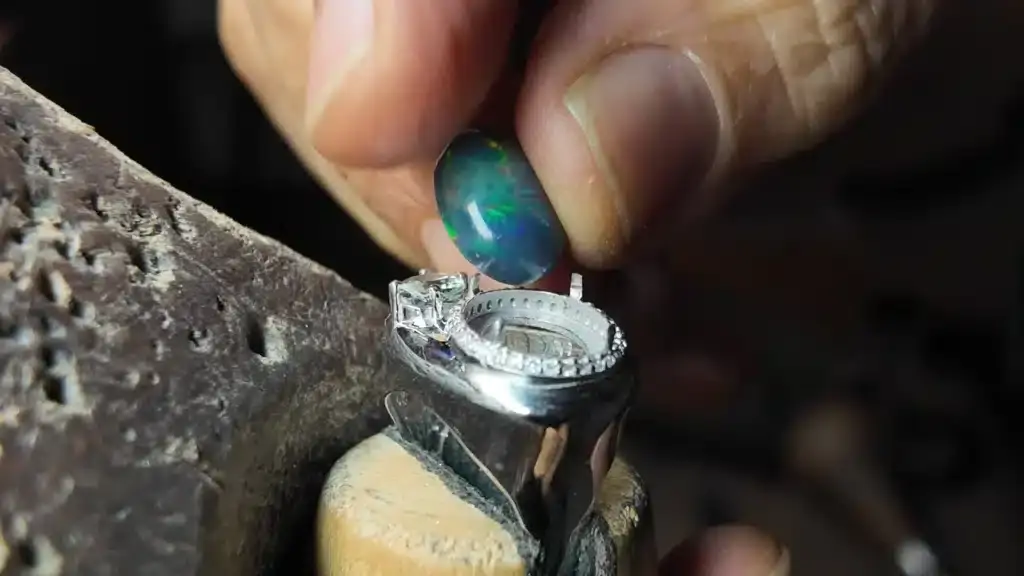
A bezel setting surrounds the stone with a thin metal rim. In Prong Setting vs Bezel Setting: Which Is Better for Your Design?, bezel setting often wins when protection matters most.
This style holds the stone from all sides. As a result, it offers a smooth surface and a secure feel. Bezel settings work well for daily wear pieces, children’s jewellery, men’s jewellery, and active lifestyles. A small charm on a chain can also feel safer with a bezel because the edges stay smooth.
The bezel can look modern, minimal, or vintage depending on the design. It can also make a stone appear slightly larger because the metal frame adds visual weight around it.
The biggest visual difference comes from light. Prong Setting vs Bezel Setting: Which Is Better for Your Design? often depends on how much sparkle the design needs.
Prong settings expose more of the stone. This helps light enter from different angles and creates more brilliance. For this reason, prongs suit designs where sparkle is the main focus. A solitaire pendant on a thin chain often looks bright and refined with prongs.
Bezel settings cover more of the stone edge. This can reduce some light, but it creates a clean and strong outline. A bezel pendant on a medium chain can look modern and polished. Therefore, the better choice depends on whether the design needs maximum shine or a smooth framed look.
Security matters, especially for jewellery that customers wear every day. Prong Setting vs Bezel Setting: Which Is Better for Your Design? becomes easier to answer when you think about lifestyle.
Prongs can hold stones well when made correctly. Still, they may catch on clothes, hair, or fabric over time. They also need checking, especially in rings and bracelets that face more impact.
Bezels offer more protection because metal surrounds the stone. This makes them a strong choice for everyday pendants, signet rings, and pieces for active customers. A chain necklace with a bezel-set stone can feel practical for daily use. If the chain is worn often, the smooth bezel helps reduce snagging.
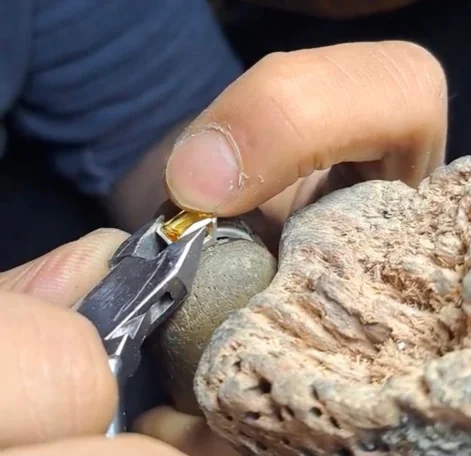
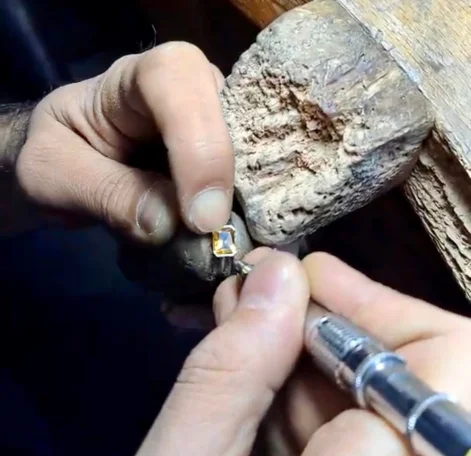
Different product types need different solutions. For rings, prongs can show sparkle beautifully, but bezels protect stones better during daily wear. For earrings, prongs can look light and elegant, while bezels feel smooth and secure.
For necklaces, the pendant size and chain style matter. A tiny stone pendant on a fine chain may look best with prongs. A larger birthstone pendant on a stronger chain may work better with a bezel. A charm necklace with more than one stone may need a chain that supports the full weight. The chain should also match the pendant’s width. A thin chain can make a large stone look unsupported. A bold chain can make a tiny stone look lost.
Bracelets need extra care because they move and hit surfaces more often. In many bracelet designs, bezel settings offer better protection. However, prongs can still work for delicate occasion pieces.
Before choosing a setting, brands should review design goals, stone type, customer use, and production method. Prong Setting vs Bezel Setting: Which Is Better for Your Design? is not only a style question. It is also a quality question.
If the stone is soft or has sharp corners, a bezel may offer better protection. If the stone is hard and the design needs sparkle, prongs may work well. Brands should also test samples before bulk production.
The full jewellery structure matters too. Check stone height, metal thickness, pendant weight, and chain length. A heavy pendant needs a stronger chain, while a small stone design can sit well on a fine chain. The chain clasp should also match the product quality. A weak chain can reduce customer trust, even when the setting looks perfect. The chain should pass through the bail smoothly. The chain should also sit straight on the neck. The chain must support the setting without twisting.